
When people talk to me about safety, they are not asking for grand gestures or slogans. They want the basics to work. They want to feel secure in their homes and neighbourhoods. They want to feel supported when something goes wrong. And they want to feel confident that the law responds properly when real harm is caused.
Across Stoke-on-Trent and Kidsgrove, the same concerns come up again and again: antisocial behaviour that goes unchecked; shoplifting becoming routine; and dangerous driving that makes everyday journeys feel less safe than they should. These problems are not inevitable. They are the result of choices – about priorities, enforcement and investment.
After years of neighbourhood policing being run down and communities left feeling exposed, this Labour government has taken a clear decision to put public safety back where it belongs: at the centre of public life. The Crime and Policing Bill reflects what people have been telling us. It strengthens actions against antisocial behaviour, improves protections for retail workers, gives police new powers to tackle dangerous vehicles and off-road bikes, and restores neighbourhood policing with named officers back on the beat.
But public safety is not only about crime figures or town centre patrols. It is also about the roads we use every day. For families across Stoke-on-Trent and Kidsgrove, road safety is a lived concern. It means safe school routes, reliable crossings, well-designed junctions and residential streets where people feel protected. It means knowing that dangerous behaviour will be taken seriously, and that the system will act quickly when the worst happens.
That is why the government’s new Road Safety Strategy matters. It is the first in more than a decade, and it starts from a simple, overdue truth: deaths and serious injuries on our roads are preventable. The law must properly reflect the gravity of the harm caused by dangerous driving.
Sharlotte’s Law speaks directly to that principle.
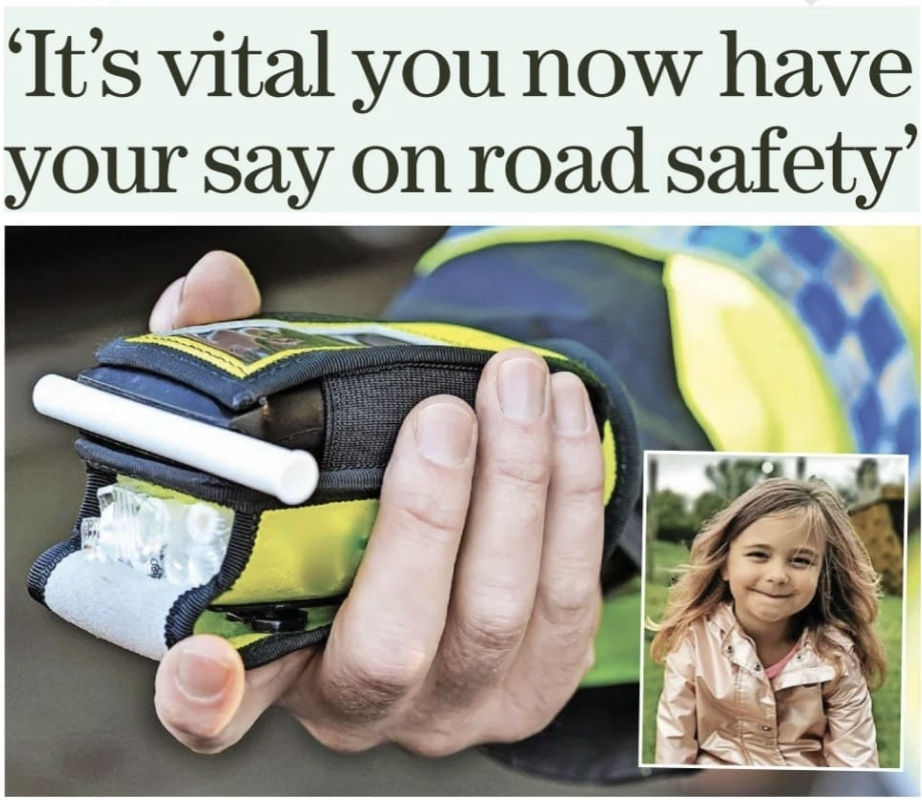
Sharlotte-Sky Naglis was just six years old when she was killed by a driver who was drunk and under the influence of drugs. After the collision, a blood sample was taken from the driver in hospital. Yet because of a gap in the law, that sample could not be tested without the suspect’s consent. The result was unacceptable delay – and a family left waiting far too long for answers.
Sharlotte’s Law would close that gap. It would allow blood samples to be tested promptly in cases involving serious injury or death, preventing investigations from being stalled by procedural loopholes. Just as importantly, it would spare families the added cruelty of uncertainty when they are already living with loss.
As part of the Road Safety Strategy, the government is now consulting on changes to motoring laws and penalties, including measures that would give effect to Sharlotte’s Law. This consultation matters. It is a real opportunity for the public to help shape laws that reflect the seriousness of the harm caused when drivers break the law.
Our area has a strong tradition of people standing up for one another. Taking part in this consultation is one practical way residents can help strengthen protections for families and prevent others from experiencing the same heartbreak.
Further information, including guidance on how to respond, is available at:
https://davidwilliams.org.uk/sharlottes-law/
Protecting our communities requires clear action, not delay. It means listening when people tell us what is not working – and fixing it. That is the approach this government is taking, and it is one I will continue to support.